Rural businesses in Surrey are finding ways to adapt and thrive thanks to funding and support from Surrey County Council.
Rising costs, falling prices and policy uncertainty have left farming communities across the UK struggling to make ends meet. But across Surrey, farmers are finding ways to adapt – and Surrey County Council’s Economic Growth Fund is providing the investment to make it possible.
From a new vineyard in Surrey Hills, to shepherd hut stays and meat vending machines, a new generation of farming entrepreneurs are finding innovative ways to diversify, sustain and futureproof their businesses.
About £380.000 in funding has been invested in Surrey’s rural economy in recent months via the Economic Growth Fund, unlocking more than £100,000 in private sector investment and supporting dozens of jobs.
Support is set to be stepped up later this year with a dedicated farming business support specialist working with farms and rural businesses across Surrey to help them navigate challenges.
Anyone interested in finding out more can get in touch using our contact us form.
Diversifying to overcome challenges
Louise Wilkinson is the third generation of her family at Upper Birtley Farm, and she returned with her two children after a career in hospitality. Her father still runs the arable side of the business, growing wheat and oats in a market which is very challenging to make a profit.
Something needed to change – and Louise’s solution was to bring in shepherd’s huts offering rural escapes, alongside a community events space hosting courses with local beekeepers, foragers and butchers.
Alongside her hospitality experience, Louise said camping on the land with her daughters is what gave her the idea to create a countryside escape.
“It’s about adding to British farming,” she said. “We have this piece of land that can’t be farmed for whatever reason , and it makes the farm more sustainable.”
With a test run planned for April and a full launch targeting the May bank holidays, Louise is building something that she hopes will carry the farm through for another generation. “I’m third generation with two children who will be excited to grow up here,” she said. “It’s everything really.”
Innovative ways to increase sales and grow markets
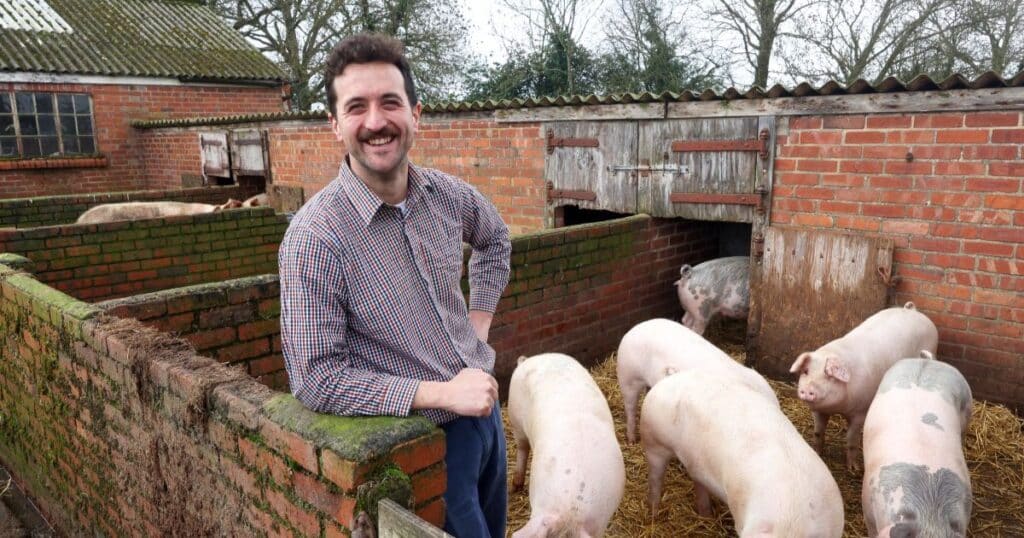
Almost a decade ago, fourth-generation farmer Alec Clouting was at a farming event and spotted vending machines selling local produce. He immediately saw their potential, but without the funds to make it happen, the idea stayed on the backburner.
Now, thanks to the Economic Growth Fund, it’s becoming reality, and Alec was able to buy a shipping container, commercial freezer and vending machine to sell frozen beef, lamb and pork directly to consumers, seven days a week at Ivelle Farm in Cranleigh.
Most of the farm’s meat currently goes to livestock markets and on to supermarkets – a model that leaves farmers with little control and thinner margins. Selling direct means better profit margins while making a connection with consumers locally.
“I am a big believer of people being in touch with where their food comes from,” Alec said. “For the local community to be able to come to the farm where it comes from and get it direct.”
The model also creates a ripple effect, supporting a local butcher and abattoir and strengthening a network of rural businesses. Looking further ahead, Alec sees franchise potential – a blueprint that other farms could replicate.
He said: “Farming is a very difficult business to navigate with many layers of complexity, and with the recent added pressures of the farm inheritance tax, it’s becoming harder to make small family farms like ours financially viable. So having a future-proof way of selling my produce as profitably as I can will give me the best chance I could wish for.”
Using natural resources in new, sustainable, ways
Jason and Emma Robertshaw bought Blakes Lane Farm in 2018, but they weren’t sure what came next – only that they wanted to put the land to good use. The land was home to a run-down equestrian centre and was used by tenant sheep farmers. They soon discovered the farm sits on the same chalk that extends beneath the English Channel into France’s Champagne region.
“We started planting vines in 2020,” Jason explains. “It was a pretty small-scale experiment to see how they grow. We then realised we’ve got the ideal growing climate for sparkling wine.”
That experiment has grown into The Guildford Vineyard, an English sparkling wine producer now building a purpose-built, sustainably-designed winery – with match funding from the Economic Growth Fund providing the financial foundation they needed. When at full capacity, the vineyard aims to produce 10,000 bottles a year, with ambitions to export to Japan alongside domestic sales to restaurants and hotels. And the tenant farmer’s sheep will remain on the land grazing between the vines in winter, which brings in regenerative farming practices, something which was important to the plan, as Jason comes from a farming family.
“We couldn’t have done it without the grant,” the couple said. “We wouldn’t have been able to build the winery. It has been fantastic.”
The Surrey Economic Growth Fund
To date almost £2 million has been awarded to dozens of recipients across the county via the Surrey Economic Growth Fund. This funding has helped to unlock significant match funding and private investment, growing Surrey’s economy by £9 million.
Any Surrey business – rural or urban, looking for funding or help to grow can receive fully-funded support from Business Surrey. Get in touch via our Contact us form.