Hundreds of young people with SEND explore their futures at Surrey’s 2026 Transitions Fair

Hundreds of young people with additional needs got a taste for their future at Surrey County Council’s 2026 Transitions Fair.

More than 300 young people attended the Surrey County Council-hosted event which brought together over 30 exhibitors and 19 schools from across the county.
This event enabled young people with special educational needs and disabilities (SEND) to understand the options available for their transition from education to employment, further education, training or social settings.

Now in its second year, the fair at the council’s Woodhatch Place HQ in Reigate attracted enthusiastic participation from attendees aged 14 to 25.

It was organised by Surrey Careers Hub, which connects schools and colleges with employers to inspire the county’s future workforce.

Tim Oliver, Leader of Surrey County Council, shared his positive reflections on the success of the fair:
“The Transitions Fair is one element of Surrey’s education, skills and training offer for young people. Surrey County Council is committed to ensuring that every young person in Surrey, regardless of their educational needs, has access to the resources and support that will help them succeed, with no one left behind.

“It is inspiring to see so many young people actively exploring the range of options open to them for their future. I’m sure those attending left feeling inspired and enthused about their futures.”

What the fair covered

The event’s 30-plus exhibitors included colleges and educators, employers, employment support organisations, apprenticeship providers and social settings. All were dedicated to offering valuable guidance and information to help attendees make informed choices about their next steps.

A bespoke film featuring representatives from Surrey County Council’s facilities management contract was commissioned to demonstrate to students the people and the jobs that keep Woodhatch Place a safe, welcoming and accessible working environment. Students were inspired to hear about the types of roles available, learning how staff came to be employed in those roles and how they are continuing to enjoy their roles and grow their careers.

Before the fair started, exhibitors were introduced to Understand Us, who use first-hand lived experience to help organisations improve their services for both customers and employees who live with a learning disability.

One enthused student from The Park School commented: “Thank you so much. I loved it. I know so much more now about what I can do after school.”

And a teacher from Oxted School said “A fantastic opportunity for students who needed additional support and guidance about their future with some amazing exhibitors at hand, who had time to explain their products in a very patient and easy to understand manner.”

Exhibitors also found the event to be highly successful and worthwhile attending, with one representative from Activate Learning commenting: “Events like this play a vital role in ensuring career fairs are accessible to everyone, offering meaningful interactions and opportunities that are achievable for attendees.”

To find out more about Surrey Careers Hub, and about the skills, training and employment support that Surrey County Council can provide, visit STEP Surrey, our skills, training and employment portal today at: www.STEPSurrey.co.uk

About Surrey Careers Hub

Surrey Careers Hub plays a vital role in connecting education with employment, helping all young people, including those with additional needs and disabilities, to identify and progress to their best next step. At the heart of the Careers Hub is the belief that every young person deserves the strongest possible start to adult life, with the freedom to choose their own path and achieve their full potential.

The Surrey Careers Hub sits within Surrey County Council’s Economy and Growth Team. Working in partnership with The Careers and Enterprise Company, it collaborates with careers leaders, educators, employers and training providers to inspire and prepare young people through high-quality, modern careers education fit for the 21st century.

List of exhibitors:

Achieve Together
Activate Learning
Adult Services
Ambitious College
Art Venture
Brooklands College
Choice Care Group
Consensus Support
Skills, Training & Employment Portal – STEP Surrey
County Care
Derwen College
Dramatize
Early Years Workforce Development
Edge Disability
Family Information Service
The Grange
Halow Project
Jigsaw Plus
Linkable
MIT Skills
Nescot
nviro
Orchard Hill College
Parity
Professional Training Solutions
Ringway
SEND Advice Surrey
Skills Bootcamps
Sunnybank Trust
Surrey Choices
Surrey Youth Voice
Voluntary Action South-East
Voyage Care


Surrey Venture Studio’s first incubation programme gets off to flying start

Surrey Venture Studio (SVS) is preparing to launch its first six‑month incubation programme, supporting early‑stage founders across Surrey to turn raw ideas and early‑stage concepts into customer‑ready businesses. The incubation accelerator is aimed at pre‑start‑ups who have completed SVS’s business ideation workshops and offers tailored support based on each entrepreneur’s stage of development.

One of the founders joining the inaugural cohort is Natalie Foo, creator of InchStone, a voice‑first app designed to support families raising children with developmental differences.

Meeting a need discovered from personal experience

InchStone was shaped by personal experience. Natalie explains, “I built it because I’m a parent in this community and the gap was too obvious to ignore.”

The app organises your spoken observations into records ready for therapy, funding applications, and official assessments.”

Natalie first engaged with SVS through its intensive two‑day workshops, which focus on validating ideas before founders rush into building products.

As SVS Manager Odysseas Bassioukas, puts it, “SVS is a venture builder where people are coming to us to build from the idea to a company.”

“The workshops were intense but incredibly helpful,” Natalie says. “They helped me hone in on my idea and start making a plan. The focus on customer development really stood out; SVS puts that the right way around.”

The incubation programme will provide expert mentorship, peer support and hot‑desking facilities, alongside access to professional services such as legal advice, to help founders protect their intellectual property. For Natalie, the timing feels right. “It feels like the right moment to find out what’s actually working,” she says, as she prepares to pilot InchStone and connect with Surrey’s wider business network.

What is Surrey Venture Studio?

This is an exciting new pre-accelerator programme to help innovators, academics and entrepreneurs across Surrey explore whether turning an idea into a business is the right path to follow.

This exciting programme includes:

  • A two-day, in-person ideation workshop
  • Expert mentoring
  • Opportunity to progress to a six-month accelerator
  • Up to £25,000 catalyst grant funding, for successful six-month accelerator participant
  • Spaces on the workshop are limited and will be offered to applicants whose ideas are at the right stage of development and show strong potential for innovation and commercialisation.

At the end of the two-day workshop, participants will be invited to pitch their ideas ‘Dragon’s Den’-style. The successful applicants will secure a coveted place on the six-month accelerator programme and take a step closer to securing £25k in grant funding to launch their business!

Grant helps Surrey artist Kathy Kyle take wearable art from home studio to the high street

When artist Kathy Kyle painted a piece of gift wrap for her child’s birthday, she had no idea it would grow into a business built on wearable art and silk. A friend looked at her hand-painted paper and said: “I could imagine that on silk and wearing it. Could you make that for me?”

That moment of recognition planted the seed for Kathy Kyle Studio – a brand built around ethical, sustainable wearable art and luxury stationery, each piece hand-painted, sustainably printed and entirely human-made. Now, with the support of matched funding through the Surrey Economic Growth Fund, Kathy is taking her business to the high street – with space in a shop on Dorking’s historic West Street.

Kathy spent nearly 25 years working as a communications and marketing director for global consultancies and agencies in Washington D.C. before making the leap to follow her creative calling.

“I decided to follow my dreams and become an artist,” she says. “I did that only a year ago and it’s been incredible how fulfilling it’s been.”

The business grew organically from her art practice – a stained shirt rescued with hand-painted designs; scarves commissioned by friends; gift wrap that became fabric.

“I don’t want to overproduce,” she says. “I wanted to create wearable art that adds value to people’s lives. For me it is about purpose and intention – how can I create something beautiful that endures?”

Growing the business from idea to High Street

What followed was a rapid series of milestones: a launch at a Soho gallery; a debut at Top Drawer trade fair, which brought her first stockists; scarves shown at London Fashion Week through her Buy Women Built network; and a pitch at the Great British Pitch exploring international trade. Yet without external funding, scaling remained out of reach at this early stage.

“We needed this seed to help us grow,” she explains. “I was just using my savings and earnings. We needed to expand and diversify our approach.”

As one of nearly 30 local Surrey businesses to receive grant funding through the Surrey Economic Growth Fund, Kathy describes the award as transformational. The investment is enabling her to expand her core pure silk accessories range – with luxury scarves and wraps – as well as extending her stationery line into interiors, including wallpaper, cushions, linens, and bespoke fabric and commissions.

“People have said to me, I really want to see your art on cushions, fabric, or wallpaper,” she says. “I can now do those things.”

The new studio space is in Sandrock House on Dorking’s West Street – an award-winning interiors shop, and a fitting home for a brand that believes in collaboration and community.

“The world of retail is changing,” Kathy says. “It helps everyone to collaborate to be successful. Lift each other up.”

It’s a philosophy that runs through everything she does, including her commitment to making every piece ethically and as sustainably as possible, and by hand without AI. “I have taken great care to collaborate with suppliers who share our values and I think you can see this ethos in the quality and craftsmanship of our products.”

“I am thrilled to receive this boost to the business,” says Kathy. “I am looking forward to not only bringing our vision to market, but doing it in online and offline: in real life, in my community, and in a shop.”

The Surrey Economic Growth Fund

To date almost £2 million has been awarded to dozens of recipients across the county via the Surrey Economic Growth Fund. This funding has helped to unlock significant match funding and private investment, growing Surrey’s economy by £9 million.

Any Surrey business looking for funding or help to grow can receive fully-funded support from Business Surrey. Get in touch to find out more via our Contact us form.

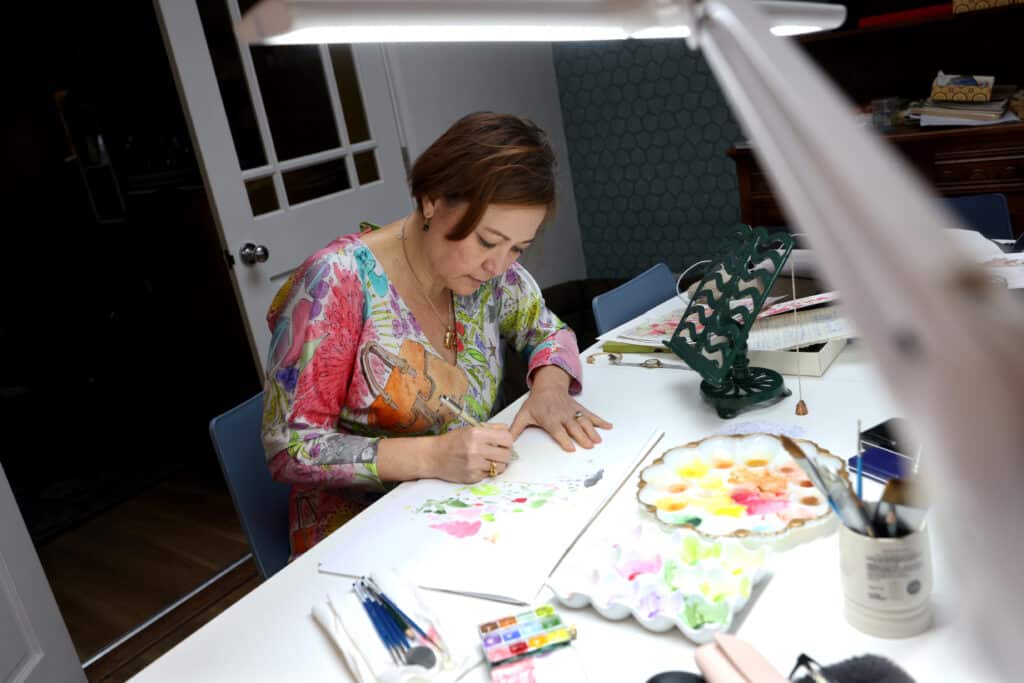
Kathy sits at a table working on her designs on paper. | Business Surrey, Economic Growth Fund

Construction-focused Skills Bootcamps applications now open for Surrey employers and training providers

Are you a Surrey construction-based employer struggling to recruit? Does your team have skills gaps you’d like to fill? Apply today for Skills Bootcamps funding to equip your business with the talent and know-how to thrive. 

Surrey employers and training providers are invited to submit applications for construction skills-based Skills Bootcamps delivery in 2026/27. These government-funded courses can upskill your team in a just a few weeks.

Skills Bootcamps are free, flexible courses of up to 16 weeks for anyone aged 19+ to help them enter employment, upskill or change career. 

Surrey County Council has a funding pot of £1.2 million to deliver Skills Bootcamps courses across Surrey during 2026/27. 

We’re looking for innovative ideas from employers and training providers in the construction sector to design and deliver courses to equip our Surrey residents with the skills to grow our future economy. 

Think Skills Bootcamps may be a good fit to help you upskill your team or address your workforce needs? Get in touch to find out more by emailing skillsbootcamps@surreycc.gov.uk. A member of the team will then arrange a one-to-one discussion to talk through your challenges and objectives and help you to see if Skills Bootcamps could be a good fit for your business. 

Or if you’re ready to apply now, just scroll down to find out more about the process.

Skills Bootcamps 2026/27 – who can apply  

Applications can be made by:  

  • Independent training providers  
  • Further education (FE) colleges  
  • Employers  

As an employer, you already have all the relevant information and background understanding you’ll need to put together a robust proposal. This includes demonstrating creative design and an understanding of local employers’ needs relevant to the construction industry. 

If you’d like to get involved, but don’t have experience of skills training?  

You can apply in partnership with another organisation. They would need to be able to evidence proven experience and strong local networks to design and deliver innovative courses shaped around the needs of jobseekers and employers.  

Contact the Business Surrey team to discuss this further.

Skills Bootcamps applications

We are now accepting construction skills-based Skills Bootcamps applications from interested parties under a competitive grant award process. Successful applicants will form part of Wave 7 of the programme, with courses completing by the end of March 2027. 

Future applications will be accepted for other courses from late May to early June.

Applications will need to evidence demand, strategic fit and innovation, setting out: 

  • Access to employment post training (preference will be given to bids written in partnership with employers that show clear progression into job roles) 
  • How you will meet demand in the local economy, using evidence such as Surrey Economic Growth Strategy and Labour Market Information 
  • Who your target learners are and how you will ensure positive outcomes
  • Your previous experience delivering employer-led training 
  • Previous collaboration with local employers and commitment from current employers to support delivery and provide employment opportunities
  • How you will deliver the programme 

We actively encourage joint applications from training providers and employers. When applying, please be sure to clearly evidence how the course will fill open vacancies.

We are keen to see applications focused on helping economically inactive people to enter employment.

The first round of applications is open until 29th May. We will assess applications on a rolling basis for suitability. But we do advise applicants to submit entries as soon as possible. This is so courses can be delivered before the end of March 2027. 

Apply now by completing the application form .

Not sure where to start? Looking for more guidance? Get in touch via skillsbootcamps@surreycc.gov.uk

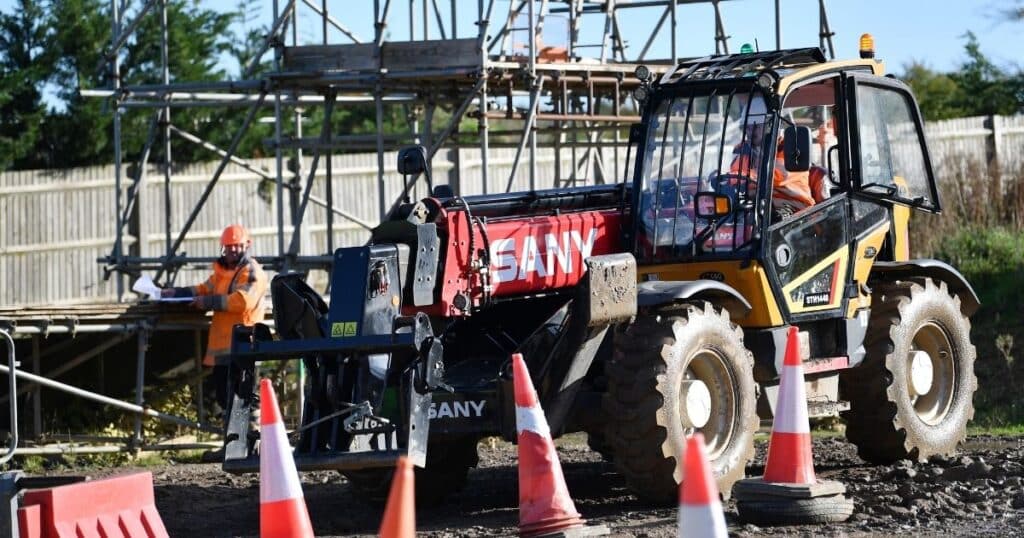
Skills Bootcamps _ wave 7, tractor in action

South East manufacturers get £3.1m digital transformation boost through Made Smarter

Hundreds of manufacturers across the South East are set for a major digital upgrade after the Government confirmed fresh funding for the Made Smarter programme from April.

The £3.1 million investment will give SME manufacturers across the region access to expert technology advice, leadership training, digital skills development and match-funded grants to help boost productivity, drive innovation, create high-value jobs and cut carbon.

Made Smarter South East is a government-backed, industry-led programme delivered by Surrey County Council in partnership with 11 local authorities and Local Enterprise Partnerships across the South East region.

Made Smarter’s impact in the South East

Since launching in April 2025, the programme has supported 273 manufacturers, participated in 137 diagnostic workshops, developed 93 digital roadmaps, delivered 41 leadership and digital champions training interventions, placed 6 digital interns, and approved grants for 20 technology projects.

Over the last year, manufacturers have secured over £307,000 in matched funding to enable over £1 million of investment in technologies ranging from ERP systems and 3D printing to robotics and automation.

Bryan Vint, Programme Manager for Made Smarter South East, said: “This new wave of funding is a huge boost for manufacturers across the South East. In our first year we have already shown what the region can achieve when SMEs have access to the right advice, skills and technology.

“The continuation of the programme gives businesses the confidence to plan ahead, invest in digital tools and build the skills they need to grow. We are excited to help hundreds more manufacturers unlock productivity, resilience and long-term growth.”

The support available with Made Smarter

Made Smarter is designed to give manufacturers a fast and practical route into digital transformation. Businesses begin with an expert digital assessment to identify their technology and skills priorities, followed by a tailored roadmap to guide future investment.

Leadership development programmes, workforce training and digital internships help companies build the capabilities needed to adopt new technologies and embed change across their organisations.

To support technology adoption, businesses can also access match funding of up to 50 percent, with grants of up to £20,000 available for capital technology projects.

How one Surrey business has benefitted from the programme

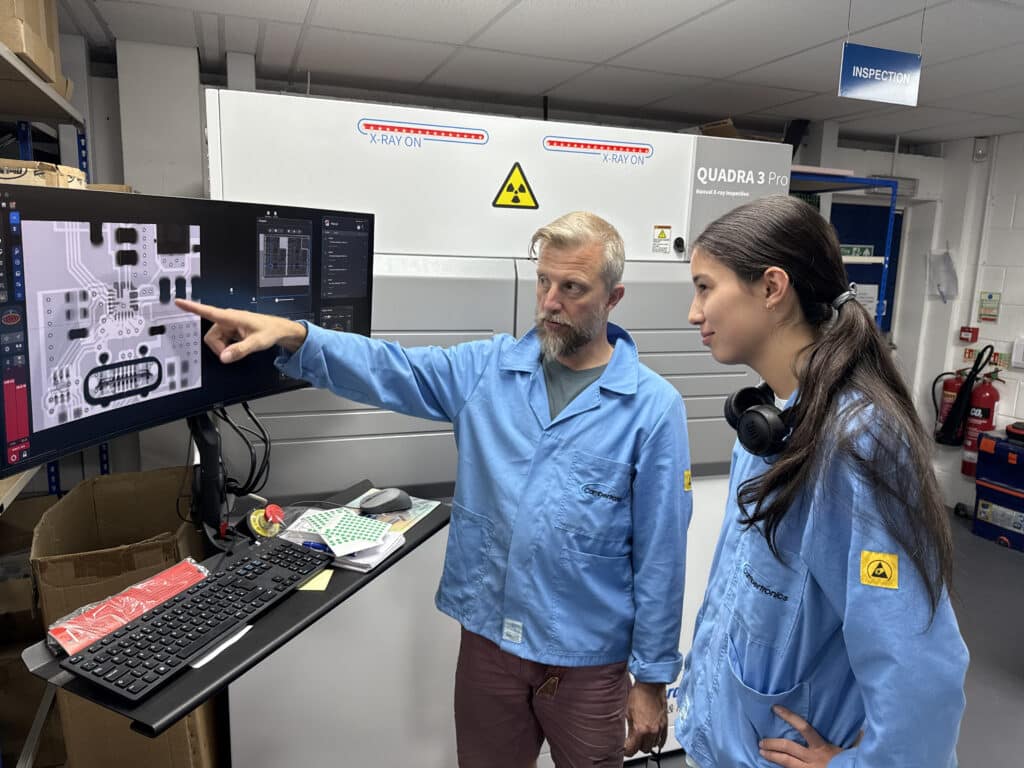
Cambertronics, based in Cranleigh, Surrey, is a contract electronics manufacturer providing design, prototyping and full turnkey production for sectors including automotive, marine, agritech and industrial electronics. Through Made Smarter South East, the business completed a Digital Transformation Workshop and joined the Leadership and Digital Champion programmes to help shape its digital strategy and build internal capability for change.

Jasper Whitefield, Business Development Manager, Cambertronics, Cranleigh, Surrey, said: “We’ve invested heavily in advanced manufacturing equipment over the years, but many of our systems still rely on manual processes. We wanted to explore how digital technology could help improve traceability, streamline processes and give us better visibility across the business.

“The Digital Transformation Workshop helped us identify clear priorities, including automated barcoding, ERP integration and strengthening leadership capability across the team. Taking part in the leadership and Digital Champion programmes is helping us build the confidence, skills and internal ownership needed to drive that change. It means we can modernise our operations, respond faster to customers and continue delivering the quality and expertise they expect as the business grows.”

To learn more, and start your journey to digitisation with free support from Made Smarter, visit the Made Smarter website.

Funding support for your Surrey business

Looking to raise funding or investment into your Surrey business? Our team of experts are on hand to provide fully-funded advice to all Surrey businesses.

Get in touch via our Business Support Form to see how your business could access finance to help you grow.

Picture credit: Cambertronics

Why offering work experience is good for business

Opening your doors to students isn’t just good for young people – it’s good for your business too.

By welcoming students into your workplace, you help bridge the gap between education and employment and inspire the next generation. But it can also deliver real business returns.

Employers who offer work experience are 77% more likely to report business benefits such as a stronger talent pipeline. For those offering a wide range of experiences – such as job shadowing or T-Levels, that figure rises to 90% (The Careers & Enterprise Company. The Business Case for Work Experience: Employer Standards 2024/25).

With recent changes to work experience guidelines, where students are expected to have workplace experiences throughout their secondary school years, there are now many flexible options on what you could offer. Whether it’s a half-day visit, a hands-on project or part-time job shadowing over a number of weeks, there has never been a better time to get involved.

What you gain by offering work experience

Engaging with young people through work experience gives you the chance to showcase your sector and career pathways to the next generation. You’ll be building meaningful relationships with local schools and colleges, contributing to developing future talent in your industry and influencing curriculum relevance – helping educators understand what employers actually need.

Why this matters for your business

Access to future talent

Early engagement helps students who may never have considered your industry to see your sector as a viable career path. The students you host today could be your apprentices, graduates or employees tomorrow.

Shape the workforce

You have a direct opportunity to influence what skills young people develop – and to help them understand what employers actually need from day one.

Flexibility reduces barriers

Work experience no longer has to mean a full week’s placement. Shorter visits, project briefs, workplace tours, or placements spread across the year make it far more manageable – especially for smaller businesses or those with fluctuating capacity.

Supporting local communities

Hosting students – particularly those from disadvantaged backgrounds – helps young people access opportunities beyond their immediate networks. The impact can be profound and lasting.

Ready to get involved?

Whether you can offer a two-hour visit, a project brief or a longer placement, there’s a format that works for your business. If you want to explore providing work experience, Surrey Careers Hub is here to support you.

Complete our form to express your interest, and we’ll arrange a short consultation to understand your business, capacity and what would work best for you. Together, we’ll help you design a programme that suits your circumstances and industry.

Through our work experience matching platform CareerThread, you can connect with schools and students whose interests align with your sector.

Get started today. Complete our contact form or visit Surrey Careers Hub to find out how to take the first step.

Surrey County Council supporting farmers to diversify in a tough climate for rural economy

Rural businesses in Surrey are finding ways to adapt and thrive thanks to funding and support from Surrey County Council.

Rising costs, falling prices and policy uncertainty have left farming communities across the UK struggling to make ends meet. But across Surrey, farmers are finding ways to adapt – and Surrey County Council’s Economic Growth Fund is providing the investment to make it possible.

From a new vineyard in Surrey Hills, to shepherd hut stays and meat vending machines, a new generation of farming entrepreneurs are finding innovative ways to diversify, sustain and futureproof their businesses.

About £380.000 in funding has been invested in Surrey’s rural economy in recent months via the Economic Growth Fund, unlocking more than £100,000 in private sector investment and supporting dozens of jobs.

Support is set to be stepped up later this year with a dedicated farming business support specialist working with farms and rural businesses across Surrey to help them navigate challenges.

Anyone interested in finding out more can get in touch using our contact us form.

Diversifying to overcome challenges

Louise Wilkinson is the third generation of her family at Upper Birtley Farm, and she returned with her two children after a career in hospitality. Her father still runs the arable side of the business, growing wheat and oats in a market which is very challenging to make a profit.

Something needed to change – and Louise’s solution was to bring in shepherd’s huts offering rural escapes, alongside a community events space hosting courses with local beekeepers, foragers and butchers.

Alongside her hospitality experience, Louise said camping on the land with her daughters is what gave her the idea to create a countryside escape.

“It’s about adding to British farming,” she said. “We have this piece of land that can’t be farmed for whatever reason , and it makes the farm more sustainable.”

With a test run planned for April and a full launch targeting the May bank holidays, Louise is building something that she hopes will carry the farm through for another generation. “I’m third generation with two children who will be excited to grow up here,” she said. “It’s everything really.”

Innovative ways to increase sales and grow markets

Almost a decade ago, fourth-generation farmer Alec Clouting was at a farming event and spotted vending machines selling local produce. He immediately saw their potential, but without the funds to make it happen, the idea stayed on the backburner.

Now, thanks to the Economic Growth Fund, it’s becoming reality, and Alec was able to buy a shipping container, commercial freezer and vending machine to sell frozen beef, lamb and pork directly to consumers, seven days a week at Ivelle Farm in Cranleigh.

Most of the farm’s meat currently goes to livestock markets and on to supermarkets – a model that leaves farmers with little control and thinner margins. Selling direct means better profit margins while making a connection with consumers locally.

“I am a big believer of people being in touch with where their food comes from,” Alec said. “For the local community to be able to come to the farm where it comes from and get it direct.”

The model also creates a ripple effect, supporting a local butcher and abattoir and strengthening a network of rural businesses. Looking further ahead, Alec sees franchise potential – a blueprint that other farms could replicate.

He said: “Farming is a very difficult business to navigate with many layers of complexity, and with the recent added pressures of the farm inheritance tax, it’s becoming harder to make small family farms like ours financially viable. So having a future-proof way of selling my produce as profitably as I can will give me the best chance I could wish for.”

Using natural resources in new, sustainable, ways

Jason and Emma Robertshaw bought Blakes Lane Farm in 2018, but they weren’t sure what came next – only that they wanted to put the land to good use. The land was home to a run-down equestrian centre and was used by tenant sheep farmers. They soon discovered the farm sits on the same chalk that extends beneath the English Channel into France’s Champagne region.

“We started planting vines in 2020,” Jason explains. “It was a pretty small-scale experiment to see how they grow. We then realised we’ve got the ideal growing climate for sparkling wine.”

That experiment has grown into The Guildford Vineyard, an English sparkling wine producer now building a purpose-built, sustainably-designed winery – with match funding from the Economic Growth Fund providing the financial foundation they needed. When at full capacity, the vineyard aims to produce 10,000 bottles a year, with ambitions to export to Japan alongside domestic sales to restaurants and hotels. And the tenant farmer’s sheep will remain on the land grazing between the vines in winter, which brings in regenerative farming practices, something which was important to the plan, as Jason comes from a farming family.

“We couldn’t have done it without the grant,” the couple said. “We wouldn’t have been able to build the winery. It has been fantastic.”

The Surrey Economic Growth Fund

To date almost £2 million has been awarded to dozens of recipients across the county via the Surrey Economic Growth Fund. This funding has helped to unlock significant match funding and private investment, growing Surrey’s economy by £9 million.

Any Surrey business – rural or urban, looking for funding or help to grow can receive fully-funded support from Business Surrey. Get in touch via our Contact us form.

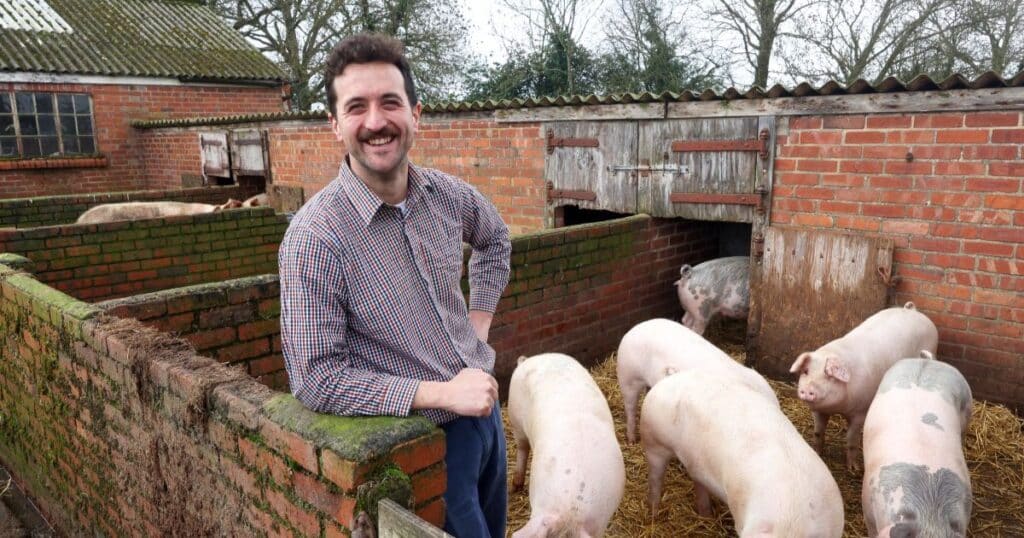
Alec Clouting at Ivelle Farm, Cranleigh | Surrey Economic Growth Fund | Rural economy

A safer future: using AI and radar technology to prevent road accidents

A Surrey-based technology company is pioneering a new approach to road safety by using artificial intelligence and radar sensors to predict dangerous traffic incidents before they occur.

Dorian Isaacson, founder of Rhevia, said: “The motivation behind starting the business was on a Friday afternoon I would untether myself from Teams and I would take a walk to the high street in town with my two daughters and I would go past three zebra crossings. Often drivers would just drive over the zebra crossing.

“I wanted to solve the reason a driver does not see a pedestrian and to understand how often this happens and what are the forces that lead it to happening. Realising what the problem is and then solving it is what we’re starting to do now.”

The technology behind it

Rhevia developed an AI-powered intelligence platform that transforms radar data into actionable insights for transport safety, planning and operational efficiency. Unlike traditional traffic monitoring systems, Rhevia deliberately avoids cameras, opting instead for radar technology that respects privacy while gathering critical data.

“We help private and public organisations understand how vehicles are moving in real time and over time so they can make informed decisions on roads,” Dorian explains.

The company serves both public sector clients like councils and private organisations with ports and factories – “places where pedestrians and vehicles are constantly interacting.”

How the funding is helping

The grant from the Surrey Economic Growth Fund will enable Rhevia to advance beyond simple movement tracking to predictive analytics.

“We are using the grant to bring context to the movements. For example, there’s a couple of near misses at this zebra crossing and these are the reasons why,” says Dorian.

“That has been the focus of the funds from the grant, to build up the analytics – to move from trailing indicators to anticipating what might happen. In order to develop that we have employed three people and another two in the pipeline as well.”

Dorian has set ambitious targets for the coming year. He said: “In a year I would hope to be working with ten local authorities with 30 to 40 deployments for each one.

“The Government has recently released a new strategy on roadside safety. I would like Rhevia to be a pioneer in that framework and to prevent those accidents before they occur and to do that throughout the UK.”

The Surrey Economic Growth Fund

To date almost £2 million has been awarded to dozens of recipients across the county via the Surrey Economic Growth Fund. This funding has helped to unlock significant match funding and private investment, growing Surrey’s economy by £9 million.

Any Surrey business looking for funding or help to grow can receive fully-funded support from Business Surrey. Get in touch via our Contact us form.

Five steps to get your small business work experience ready

If you’ve been thinking about offering work experience but aren’t sure where to begin, now is a great time to start.

Under new government guidelines, every student should have multiple workplace experiences throughout their education. Gone are the days of a two-week placement in Year 10 being the only option available – there are now multiple ways for employers to offer meaningful experiences throughout secondary school.

For businesses, this creates more opportunities to engage with young people, and flexibility in how you participate. Not only are you giving young people a chance to gain real-world skills, you’ll be introducing the next generation to your sector and identifying future talent early. So the benefits go both ways.

If you think you could offer meaningful work experience for secondary school students, here are five steps to get started with work experience in your small business.

  1. Identify what you can offer

Start by looking realistically at your capacity. If you’ve felt unable to offer a full-week placement in the past, one of the new options may work well for you. Businesses can offer a two-hour or half-day site visit with talks and workshops, a workplace safari with other businesses, work shadowing in-person or virtually, as well as a hands-on project over a few days.

Think about quieter periods when hosting students would be manageable. The key is finding an arrangement that’s sustainable for your business while offering genuine value to the students. Starting small, perhaps with a single two-hour or half-day visit, lets you test what works before scaling up.

  1. Define clear learning outcomes

Setting out specific learning outcomes is the best way to create a meaningful experience for young people and make the best use of your time. For example, students coming away with an understanding of the customer service skills required in retail is more useful than just experiencing a retail environment.

Clear outcomes help you structure the programme, brief your team and provide a valuable learning experience. They also help you identify students who show genuine aptitude in the skills your sector needs; these young people could become future apprentices or employees.

  1. Prepare your team

Your employees are crucial to making work experience successful. Brief them on what’s expected and bring them in to help tailor the programme – they will have something valuable to share.

Identify team members who will interact well with students and consider appointing a work experience coordinator who can take ownership of the project. Discuss what meaningful interaction looks like: answering questions, explaining tasks and sharing honest insights about your industry.

Employees often find supporting work experience participants very rewarding. It can help develop their own communication skills and enhance their sense of purpose through inspiring the next generation.

  1. Create structured activities and tasks

Students need to actively participate and engage with the experience. Design tasks that are achievable but provide genuine insight into your sector, and ideally, add value to your business.

Activities might include researching competitors, creating social media content, mystery shopping your customer service, contributing to team meetings or shadowing different departments.

Well-designed tasks can deliver real value: fresh market research, usable content or honest feedback on your customer experience. You will also gain insight into the mindset of the next generation, which could inform future business strategy.

  1. Get in touch with Surrey Careers Hub

If you want to explore providing work experience in your small business, Surrey Careers Hub is here to support you.

Complete our contact form to express your interest, and we’ll arrange a short consultation to understand your business, capacity and what would work best for you. Together, we’ll help you to design a programme that suits your circumstances and industry.

Through our work experience matching platform CareerThread, you can connect with schools and students whose interests align with your sector.

Get started today. Complete our form or visit Surrey Careers Hub.

New fire safety rules to reshape high rise residential management

Surrey Fire and Rescue Service warn that major changes are coming for those managing high rise homes with new fire safety rules coming into force soon.

From April 2026, the Fire Safety (Residential Evacuation Plans) (England) Regulations 2025 will introduce new legal duties for building owners and managers, particularly those responsible for:

  • Residential buildings 18m or seven or more storeys
  • Buildings over 11m operating a simultaneous evacuation strategy

Driven by the Grenfell Tower Inquiry, the regulations focus on improving protection for residents who may struggle to self evacuate.

What Responsible Persons must do

Under the new rules, Responsible Persons will be required to:

  • Identify residents needing evacuation support
  • Complete Person Centred Fire Risk Assessments
  • Produce personalised Emergency Evacuation Statements
  • Create a building-wide Emergency Evacuation Plan
  • Store plans in a Premises Information/Secure Information Box for fire crews
  • Share key information with Surrey Fire and Rescue Service (with consent)

What this means for your organisation

Residents will see clearer communication and stronger safety measures.

Building managers, owners, and agents will need to update processes, engage proactively with residents, and maintain accurate documentation, particularly for Premises Information/Secure Information Boxes.

Find out more

Visit Surrey Fire and Rescue Service’s advice for residents and Responsible Persons webpages.