Small Business Plan unveiled by government

The Small Business Plan promising SMEs the tools they need to grow has been published by government. This includes better access to finance and stronger powers on late payments.

Small and medium sized firms employ 60% of the country’s workforce and generate £2.8 trillion in turnover. But ministers say, for too long, the odds have been stacked against small businesses.

Government’s Small Business Plan promises action to change that. At its heart is proposals to introduce the toughest laws on late payments in the G7. There’s also better access to finance, including via the British Business Bank.

It follows the recent publication of the long-term industrial and trade strategy that’s helping businesses plan ahead with confidence.

Scroll down to see how this could impact your Surrey business.

Late payments

Government estimates late payments cost the UK economy £11 billion per year and closes down 38 UK businesses every day.

New laws will give stronger powers to the Small Business Commissioner. It will empower them to wield fines, worth potentially millions of pounds, against the biggest firms who persistently choose to pay their suppliers late.

The Small Business Commissioner will have new powers to carry out spot checks and enforce a 30-day invoice verification period to speed up resolutions to disputes.

Upcoming legislation will also introduce maximum payment terms of 60 days, reducing to 45 days – giving firms certainty they’ll be paid on time.

Audit committees will also be legally required to scrutinise payment practices at board level. It places greater pressure on large firms to show they’re treating small suppliers fairly.

Mandatory interest charges for those who pay late will also be introduced.

These changes will also save small businesses valuable time, freeing up hours currently spent chasing overdue invoices so they can focus on growing their business instead.

A consultation on the proposed changes is running on the government website.

Access to finance

Many small firms struggle to secure the funding they need to invest, expand, or even survive. This is despite the UK’s world-leading financial services sector.

So, Government is launching a new £4 billion wave of financial support for small businesses. It includes a £1 billion boost for new businesses. Plus 69,000 Start-Up Loans and mentoring support to inspire the next generation of entrepreneurs and small business owners.

The Government is also delivering a new £3 billion boost to the British Business Bank – raising the total guarantee to £5 billion. This will help lenders offer more small business loans through the ENABLE programme – providing a government-backed guarantee, better loan terms and lower interest.

Other changes

Small Business Plan – reaction

Michelle Ovens CBE, Founder, Small Business Britain, said:

“I am thrilled to see the Small Business Plan launched today, putting the nation’s smallest businesses at the heart of Government strategy where it should be. These job creators and economy builders will benefit from a huge boost to funding through the British Business Bank, a boost to skills, support for high streets and a long hoped for legislative backing for getting paid on time.

“We will not see economic growth without small business growth. So I am eager to get on and help the Government deliver on this agenda – and help small businesses regardless of their background start, grow and thrive.”

Tina McKenzie, Policy Chair of the Federation of Small Businesses (FSB), said:

“Making sure businesses are paid on time, that our high streets thrive, and creating conditions in which everyone can start and succeed in business are crucial priorities for small businesses, communities and the economy.

“Today’s plan is an encouraging commitment from the Government to take the side of small businesses in the great growth challenge ahead.”

Support for your small business in Surrey

Business Surrey provides free and accessible support for all, no matter the size or stage of journey.

We recognise you may need additional help, either via email, phone or face-to-face. So you can get in touch with our expert enterprise advisors at any point.

You can also:

Two women running a small business at a table working on their laptops

Skills Bootcamps applications open for Surrey employers and training providers

Skills Bootcamps applications are being invited from Surrey employers and training providers for 2025/26. Discover how these government-funded courses can upskill your team in a just a few weeks.

Are you a Surrey employer struggling to recruit? Does your team have skills gaps you’d like to fill? Apply today for Skills Bootcamps funding to equip your business with the talent and know-how to thrive. 

Skills Bootcamps are free, flexible courses of up to 16 weeks for anyone aged 19+ to enter employment, upskill or change career. 

We – as part of Surrey County Council – have received £3.1 million from the Department for Education to deliver courses across Surrey during 2025/26. 

We’re looking for innovative ideas from employers and training providers to design and deliver courses to equip our residents with the skills to grow our future economy. 

Think Skills Bootcamps may be a good fit to help you upskill your team or address your workforce needs? Get in touch to find out more by emailing skillsbootcamps@surreycc.gov.uk. 

A member of the team will then arrange a one-to-one discussion to talk through your challenges and objectives. 

Of if you’re ready to apply, then scroll down to find out more about the process. 

Skills Bootcamps 2025/26 – who can apply 

Applications can be made by: 

  • independent training providers 
  • further education (FE) colleges 
  • employers 

As employers, you will possess the relevant intelligence to support a robust proposal. This includes demonstrating creative design and an understanding of local employers’ needs.

Do you not have experience of skills training? You can partner with organisations that can evidence proven experience and strong local networks to design and deliver innovative courses shaped around the needs of jobseekers and employers. 

Contact the Business Surrey team to discuss this further.

Skills Bootcamps applications

We are now accepting Skills Bootcamps applications from interested parties under a competitive grant award process. They will form part of Wave 6 of the programme, completing by the end of March 2026. 

Applications will need to evidence demand, strategic fit and innovation, setting out: 

  • access to employment post training (preference to partnership bids with employers)
  • how you will meet demand in the local economy, using evidence such as Surrey Economic Growth Strategy and Labour Market Information 
  • who your target learners are 
  • your previous experience delivering employer-led training 
  • previous collaboration with local employers (Training providers only) 
  • how you will deliver the programme 

We actively encourage joint applications from training providers and employers. Make sure they clearly evidence how the course will fill open vacancies.

There is no closing date. We will asses applications on a rolling basis for suitability. But we do advise applicants to submit entries as soon as possible. This is so courses are delivered before the end of March 2026. 

Apply now by completing the application form on the Business Surrey website.

Not sure where to start? Looking for more guidance? Get in touch via skillsbootcamps@surreycc.gov.uk 

Need extra support?

We know workforce and skills is a key priority for Surrey businesses. There’s lots of way you can keep up-to-date with available opportunities.

Looking for more bespoke support? Search our comprehensive business support directory.

Or get in touch with the Business Surrey team direct via our business support form.

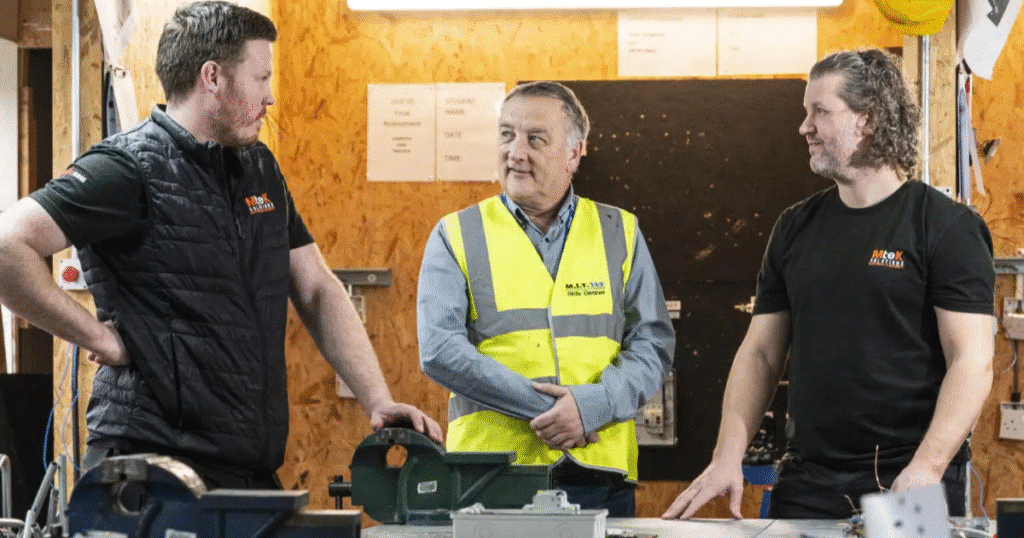
Three men talk to each other in a construction classroom. The man in a middle is wearing a high vis jacket with M.I.T. Skills on it

Local Government Reorganisation business webinar – sign up today

The way public services are delivered in Surrey is changing – and it could have a big impact on how you do business. Discover more at our Local Government Reorganisation business webinar.

Government wants to transfer more powers and funding from Whitehall to local areas, creating elected mayors in regions where they don’t currently have them – like Surrey – to drive economic growth.

For this to happen, some areas need to reorganise and streamline local government first, creating single unitary councils rather than the current two tiers of county and districts.

Our Local Government Reorganisation business webinar will feature leaders from Surrey County Council. They will explain what these changes will mean for Surrey and its economy.

Discover what impact it could have on your business. And how it could transform the way that major issues like housing, transport and planning are delivered across the region. 

The event will run via Microsoft Teams from 11.30am to 12.30pm on July 23. Register here.

Submit your questions for our Local Government Reorganisation business webinar

Government asked Surrey leaders to draw up proposals earlier this year as part of its wider devolution agenda. Final plans called Shaping Surrey’s Future were submitted in April and a government consultation on options is now live.

Surrey County Council, Elmbridge Borough Council and Mole Valley District Council are recommending Surrey is arranged into two new unitary councils, East Surrey and West Surrey. 

Discover what this could mean for you at our Local Government Reorganisation business webinar

Attendees are encouraged to pre-submit questions in advance either via the registration form or email to: economy.growth@surreycc.gov.uk

You’ll also be able to ask questions during the session via the Q&A function.   

Those questions not covered during the evening will be added to Surrey County Council’s online ‘frequently asked questions’ page.

Do take a look at the Council’s local government reorganisation web pages, where our final plan is also available.

Additional information

After registering via the Microsoft Teams event page you will be sent a notification with a Teams link.

To attend the event, either join directly via the Microsoft Teams app, or via your web browser using Microsoft Edge, Mozilla Firefox, Safari or Google Chrome.

This session will be automatically recorded and sent via email to registered event attendees within a week following the event. We will also send all attendees a recording of the webinar along with a post-event survey.

The only visible people during the session will be the speakers. The names of event attendees may be visible as part of the recording.

For further information on how we use your data please see the Business Surrey Privacy Policy.

Graphic showing a map of Surrey split in two under a Local Government Reorganisation plan

Surrey Research Park: 40 years of innovation

Surrey Research Park celebrates 40 years of innovation in 2025. And 600 people including businesses, staff and students came together to celebrate the achievements.

Surrey Research Park is a vibrant innovative business community of more than 200 companies across a 70 acre site.

It was established in 1985 by the University of Surrey. And businesses on the park are estimated to contribute £660 million a year to the Surrey economy.

Surrey Research Park 40 years celebration saw a community festival taking place earlier this month (June 17, 2025).

Surrey Research Park 40 years celebration

About 600 people – including Guildford MP Zöe Franklin – gathered to mark 40 years of innovation in Surrey.

Employees from 60 companies and partner organisations took part in a dynamic expo, showcasing their sector-leading innovation, research, and company stories.

Several guest speakers also shared fond memories of their time at the park, including:

  • Dr Malcolm Parry OBE, one of the Park’s visionary founders
  • Professor Sir Martin Sweeting, founder of Surrey Satellite Technology Limited (SSTL)
  • Peter Molyneux, founder of 22 Cans and early pioneer of the Guildford games industry
  • Mark Bennett, Technology Director, BAE Systems Digital Intelligence
  • Juliet Jones, Chief Scientific Officer at NatureMetrics, runner-up in the 2024 Earthshot Prize

The event also saw the launch of the Park’s new self-guided, AI-enabled and interactive Augmented Reality tour.

The celebrations also provided students from the University’s Department for Hospitality and Events to gain hands-on experience in event management.

Meanwhile, over in the Surrey Technology Centre, the Space Enterprise Lab was temporarily converted into a high-tech TV studio, livestreaming a two-hour innovation and technology show to viewers around the world.

Caroline Fleming, Director of Surrey Innovation District and Innovation Lead for Surrey Research Park, said:

“I think everyone really felt the vibe of a strong community that’s been built here. We heard from companies proud to call it their home, and from researchers excited to do more with those businesses. For me, it’s been a fantastic event.”

About Surrey Research Park

Surrey Research Park offers versatile office space in a vibrant innovative community. It helps meet the needs of pioneering tech and research-led companies – from solopreneurs and entrepreneurs, ambitious startups and microbusinesses to SMEs, large companies, multinationals and primes.

By joining the Surrey Research Park community, your business can benefit from:

  • Access to top-tier talent, expert collaborations, and world-class facilities that span disciplines and sectors.
  • Spaces for every business need, from workstations in our incubator and small offices to expansive units up to 40,000 sq ft, designed to support your growth and innovation.
  • Exceptional connectivity with on-site parking and a strategic location near London and major international hubs.

Discover how it could help your team thrive and your business grow by contacting Surrey Research Park direct.

Looking for more bespoke support to grow your Surrey business? Contact our team of experts for a free consultation via our Business Support Form.

The exterior of a glass fronted office building.
Group of people celebrate outside a research park in Surrey, UK

The UK’s Modern Industrial Strategy revealed

The UK’s modern Industrial Strategy has been revealed by government this week. It sets out a ten-year plan to boost investment, create good skilled jobs and make Britain the best place to do business.

The government says the UK’s Industrial Strategy provides long-term clarity and stability to grow the UK economy.

It will include targeted support for the areas of the country and economy that have the greatest potential to grow. Ministers also promise reforms that will make it easier for all businesses to get ahead.

There’s a focus on eight key high-growth sectors. Some of these sectors – such as creative industries, digital and technologies, and professional and business services – are real sector strengths for Surrey.

Ministers say future funding will focus on driving growth in these high-growth sectors. Investment will also focus on funding for SMEs, upskilling the UK’s workforce and redeveloping strategic sites.

Not all of this funding will be immediately available to Surrey. Some will only be available to those areas with directly-elected mayors, such as West Midlands and Greater Manchester. Surrey is currently on the fast-track programme to devolution – but will not have an elected mayor until after local government reorganisation is completed.

The plan will have a direct impact on Surrey’s economy both now and in the future. It aligns closely with the priorities in the Surrey Economic Growth Strategy.

And we – as part of Surrey County Council – will work with government, businesses and partners to make sure Surrey makes the most of the opportunities – ensuring we meet the demands of our 110,000 businesses while ensuring no one is left behind.

Prime Minister Keir Starmer said:

“This Industrial Strategy marks a turning point for Britain’s economy and a clear break from the short-termism and sticking plasters of the past.

“In an era of global economic instability, it delivers the long term certainty and direction British businesses need to invest, innovate and create good jobs that put more money in people’s pockets as part of the plan for change.

“This is how we power Britain’s future – by backing the sectors where we lead, removing the barriers that hold us back, and setting out a clear path to build a stronger economy that works for working people. Our message is clear – Britain is back and open for business.”

What is the UK’s modern Industrial Strategy?

The Government’s Industrial Strategy 2025 is also known as Invest 2035. It is a 10-year plan to
drive economic growth by supporting eight high-growth sectors.

The sectors – known as the IS-8 – are advanced manufacturing, clean energy, creative industries, defence, digital and technologies, financial services, life sciences, and professional and business services.

The Strategy’s plan of action includes:

  • Unlocking billions in finance for innovative business, especially for SMEs. Increasing British Business Bank financial capacity to £25.6 billion, crowding in tens of billions of pounds more in private capital. Additional £4bn for Industrial Strategy Sectors.
  • Upskilling the nation with an extra £1.2 billion each year for skills by 2028-29. Delivering more opportunities to learn and earn in our high-growth sectors including new short courses.
  • Reducing regulatory burdens by cutting the administrative costs of regulation for business by 25% and reduce the number of regulators. 
  • Supporting 5,500 more SMEs to adopt new technology through the Made Smarter programme while centralising government support in one place through the Business Growth Service.
  • Boosting R&D spending to £22.6bn per year by 2029-30 to drive innovation across the IS-8. Allocated more than £2bn for AI and £2.8bn for advanced manufacturing over the next ten years. This will leverage in billions more from private investors.
  • Attracting elite global talent to our key sectors, via visa and migration reforms and the new Global Talent Taskforce.
  • Slash electricity costs by up to 25% from 2027 for electricity-intensive manufacturers in our growth sectors and foundational industries.
  • Deepening economic and industrial collaboration with our partners, building on agreements with Japan, the US, India, and the EU.
  • Reducing planning timelines and cutting costs for developers, by hiring more planners, streamlining pre-application requirements and combining environmental obligations.
  • Revolutionising public procurement and reducing barriers for new entrants and SMEs to bolster domestic competitiveness.
  • Supporting the UK’s city regions and clusters by increasing the supply of investible sites through a new £600m Strategic Sites Accelerator.

Industrial Strategy – sector focus

The plan focuses on 8 sectors where the UK is already strong and there’s potential for faster growth. These are:

  • Advanced Manufacturing
  • Clean Energy Industries
  • Creative Industries
  • Defence
  • Digital and Technologies
  • Financial Services
  • Life Sciences
  • Professional and Business Services

Each growth sector has a bespoke 10-year plan that will attract investment, enable growth and create high-quality, well-paid jobs.

Five sector plans have been published this week:

  • Advanced Manufacturing – up to £4.3 billion in funding, including up to £2.8 billion in R&D over the next five years. Aim of anchoring supply chains in the UK – from increasing vehicle production to 1.35 million, to leading the next generation of technologies for zero emission flight.
  • Clean Energy Industries – Doubling investment in Clean Energy Industries by 2035. Total funding for the Great British Energy Supply Chain fund to £1 billion.
  • Creative Industries – Maximizing the value of our Creative Industries through a £380 million boost for film and TV, video games, advertising and marketing, music and visual and performing arts. This will improve access to finance for scale-ups and increase R&D, skills and exports.
  • Digital and Technologies – Making the UK the European leader for creating and scaling Digital and Technology businesses. More than £2 billion allocated to drive the AI Action Plan. £187 million for training one million young people in tech skills. Targeting R&D investment at frontier technologies. 
  • Professional and Business Services – Ensuring our Professional and Business Services becomes the world’s most trusted adviser to global industry. Plan to revolutionise the sector across the world through adoption of UK-grown AI. Also working to secure mutual recognition of professional qualifications agreements overseas.

How will the UK’s Industrial Strategy impact Surrey?

The industrial strategy provides a long-term vision for growing the UK economy.

There are clear connections and alignment with the Surrey Economic Growth Strategy 2025-2035, recently published by Surrey County Council.

Surrey has very strong local sector specialisms in some of the key high-growth sectors. This includes professional services, finance, creative and digital. We also have well-established clusters and innovation assets across most of the IS-8 sectors.

We also have demonstrated a commitment to unlocking local economic growth via:

However, Invest 2035 indicates funding will be targeted outside London and the South East – particularly areas which have elected mayors.

Surrey is currently on the government’s fast-track programme to create a directly-elected Mayoral Strategic Authority.

However, Local Government Reorganisation (LGR) needs to take place first. A consultation into how LGR will work for Surrey is currently ongoing.

Decorative image for the government's UK modern industrial strategy launch

New National Biosecurity Centre receives £1 billion government investment

A new National Biosecurity Centre will begin to take shape in a matter of months after government pledged £1 billion to the cutting-edge scientific campus in Surrey. When complete, the Animal and Plant Health Agency centre in Addlestone will serve as the UK’s foremost animal biosecurity facility.

Government made the announcement this week saying it will protect the British public and the economy from future pandemics.

Animal disease outbreaks represent a serious and increasing risk to public health, food security, and the UK economy.

The UK’s high containment laboratories for animal health are run by the Animal and Plant Health Agency (APHA) at Weybridge. They urgently need renewal to handle escalating disease risks, which is growing due to climate change.

The new facility will join a network of national centres set up by the Cabinet Office under the UK Biological Security Strategy. It will keep the public safe and is essential to responding to biological security risks.

Preparatory work at the Addlestone site is already underway. Planning consent has been secured and a contractor appointed to build the main new facilities.

The first interim labs to support critical science while we transform the site will be ready in 2027 and 2028. The main construction works start in 2027. And the full new National Biosecurity Centre will be live and operational in 2033/34.

Matt Furniss, Surrey County Council’s Cabinet Member for Highways, Transport and Economic Growth, said:

“We very much welcome this government investment into our region which strengthens Surrey’s reputation as a leading UK region for innovation and research.

“This cutting-edge facility will not only play a key role in protecting the nation’s health, it will also create jobs for residents and broader prosperity in our communities.

“As government looks to drive growth across the UK, our aim is to ensure that Surrey is a major part of that story – and we’ll continue to work with partners like the Animal and Plant Health Agency to make the most of opportunities, ensuring we meet the demands of our 110,000 businesses while ensuring no one is left behind.”

Why is a National Biosecurity Centre needed?

Approximately 60% of all known human infectious diseases are zoonotic, meaning they can be transmitted from animals to humans. And about 75% of emerging infectious diseases originate in animals. This makes the fight against these diseases about human health and security too.

Without strong and modernised biosecurity infrastructure, disease incursions could severely impact the UK’s farmers, agricultural production, devastate rural communities and disrupt key supply chains. 

The export of livestock, meat and meat products, dairy and animal by-products is worth £16 billion per year to the UK economy.

The funding will now enhance the country’s detection, surveillance and control capabilities for high-risk animal diseases. These include avian influenza, foot and mouth disease and African swine fever. It will also enhance the UK’s ability to manage concurrent disease outbreaks.

Jenny Stewart, Senior Science Director at the Animal and Plant Health Agency, said:

“This funding is a vital milestone in the delivery of a world-leading facility that will protect the UK from animal disease threats for decades to come.

“Our scientists and specialists at Weybridge are at the heart of the UK’s disease surveillance and response capability and provide a global centre of expertise.

“Investment on this scale will enable them to continue their critical work in modern, fit-for-purpose facilities, supported by the very latest technologies.”

What is the Animal and Plant Health Agency?

The Animal and Plant Health Agency (APHA) has its headquarters in Weybridge. It works to safeguard animal and plant health for the benefit of people, the environment and the economy.

It is part of the Department for Environment, Food and Rural Affairs with more than 2,200 employees.

APHA’s central laboratory has been in Weybridge since 1917, when it was known as the Addlestone Institute.

It has a long history of work of national and international importance. This has contributed to Surrey being animal health being a key sector for Surrey’s economy.

In 1939 it began an urgent programme for the mass production of anthrax vaccine and antiserum. This was so the country would be able to respond to the threat of a biological warfare emergency.

More recent past achievements include eradicating swine fever in the 1960s. And characterising the first case of BSE in the 1980s. It also developed the first licensed vaccine for TB in badgers in 2009.

APHA was formed in 2014 by merging the Animal Health and Veterinary Laboratories Agency with parts of the Food and Environment Research Agency. 

The network of national centres announced by government this week marks a new chapter for APHA. It will ensure the UK is better prepared for a crisis, responding more effectively to incidents and delivering a more holistic approach to biological research.

Environment Secretary Steve Reed said:

“Farmers and food producers will now be better protected from diseases, our food security strengthened, and public health better safeguarded against future pandemics. This government is getting on with delivering on our Plan for Change.

“The new National Biosecurity Centre will play an essential role in addressing the full range of biological threats we face, including from hostile nations, and will ensure that the UK retains the scientific capability, infrastructure and expertise needed to lead international efforts to identify, manage, and mitigate disease threats in the years ahead.”

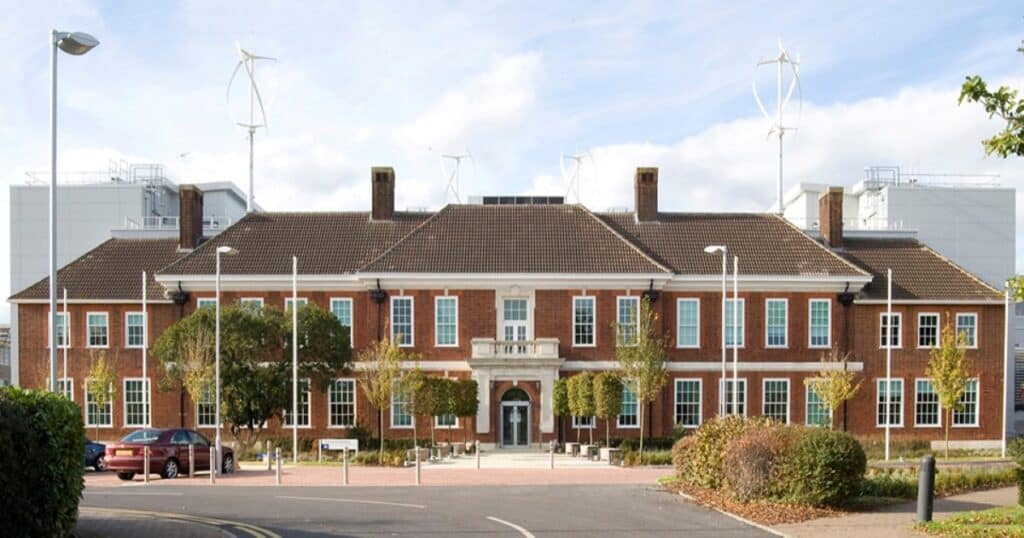
The Animal and Plant Health Agency headquarters in Weybridge, Surrey
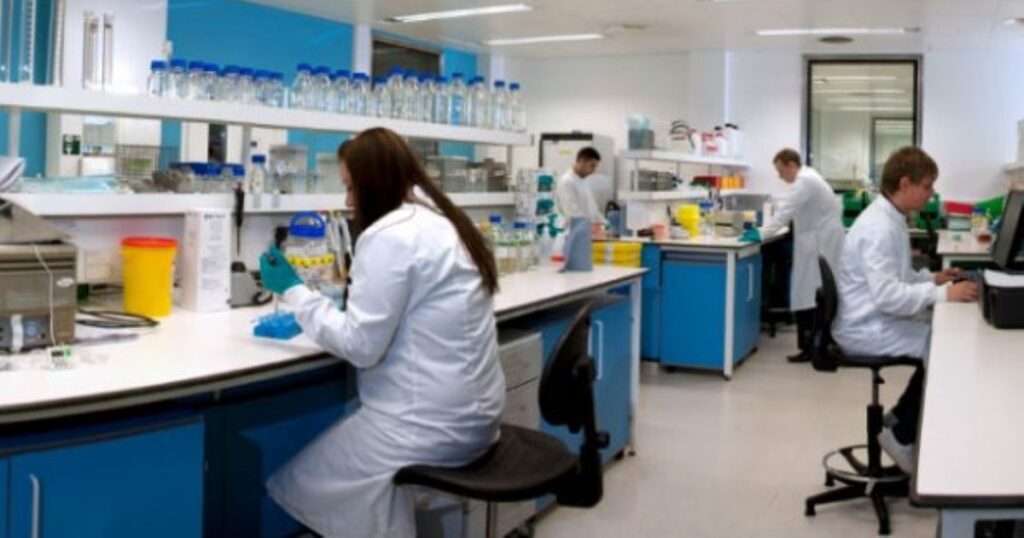
Biosecurity lab at the Animal and Plant Health Agency in Weybridge, Surrey

Local Government Reorganisation consultation now live

Have your say on the future of public services in Surrey via the Government’s Local Government Reorganisation consultation. This is part of the government’s devolution plans for transferring more powers from Whitehall to local or regional authorities.

Surrey County Council, Elmbridge Borough Council and Mole Valley District Council are recommending that Surrey is arranged into two new unitary councils, East Surrey and West Surrey

These two councils would work with an elected Mayor who would create a new Strategic Authority covering the whole of Surrey.

This plan would save taxpayers money, strengthen public services and simplify how residents and businesses access support and advice.

It is supported by key local partner organisations, including health, police and fire, business and community leaders.

An alternative proposal for three unitary authorities has also been submitted. 

The Local Government Reorganisation consultation runs until August 5, 2025. Anyone can take part.

It will help government to understand what residents, businesses and other stakeholders think about the changes in Surrey. They’ll use the results to help them make a final decision on which option is best for Surrey.

What is Local Government Reorganisation?

Local Government Reorganisation (LGR) is the process where all areas with two-tiers of councils are reorganised into fewer, unitary councils.

The new authorities would have responsibility for all local government services in their area. This includes refuse collection, highways, parks and open spaces, libraries, social care, education and planning. They would replace the current two-tier system of one county and 11 district / borough councils.

The creation of new unitary authorities would also unlock further devolved responsibilities for Surrey. These would sit with a directly elected mayor representing the whole of Surrey. And the mayor would provide strategic oversight for economic development, skills, transport and housing.

Other areas, such as Greater Manchester and the West Midlands, already operate successfully this way. It sees the strategic authority working with employers to drive growth. It also improves employment opportunities for residents and brings investment into their regions.

Timeline for Shaping Surrey’s Future

Government asked Surrey leaders to draw up proposals earlier this year as part of its wider devolution agenda. Final plans called Shaping Surrey’s Future were submitted in April.

Surrey County Council, Elmbridge Borough Council and Mole Valley District Council are recommending Surrey is arranged into two new unitary councils, East Surrey and West Surrey. 

A resident information event takes place on 7 July to explain LGR and the proposal. Anyone can sign up on the external LGR event page.

Tim Oliver OBE, Leader of Surrey County Council said: “We urge everyone in Surrey to take part in this government consultation to help us build a stronger future for Surrey. Two unitary councils will simplify services, save money and strengthen communities. This is an important opportunity for people to have their say.

“This is an exciting time, and I’m confident that residents will feel the benefit of a new system of local government and community engagement in Surrey, with the proposal for two unitary councils supported by multiple partners who share an ambition to make this county stronger and fit for the future.”

Other proposals were put forward to government. This includes a plan for three unitary councils supported by other district and borough councils in Surrey.

A third proposal for Crawley to move into Surrey was not taken forward by government.

Ministers will make a final decision in the early Autumn.

LGR – view from a business leader

Chris Hurren, chair of Surrey Business Leaders’ Forum, wrote an individual letter of support for the two unitary council proposal. He writes:

“While we recognise that LGR in itself is a matter for our local authority leaders to discuss directly with [government], on behalf of businesses across Surrey I want to reemphasise the importance of delivering strategic economic functions on a single county footprint.

“Our belief – supported by examples of devolution elsewhere, such as Greater Manchester and the West Midlands – is that business growth is dependent upon opportunities to maximise and leverage economies of scale, supporting cross-county collaboration between high-growth clusters and innovation assets.”

He says: “Whichever path is taken through the Local Government Reorganisation and devolution in Surrey, future success will require collaborative working with strong and independent unitary authorities operating on functional economic areas with a fair and reasonable split of innovation assets and strategic towns.

“We trust government and our local elected representatives to agree on the best way forward for the businesses, residents and communities of Surrey, ensuring that these authorities are well-placed to provide crucial, efficient and effective public services in the short and long term.”

Take part in the consultation on the government website by August 5, 2025.

Infographic with a map of Surrey divided into two with icons representing the region

Surrey Economic Growth Fund round one update

The Surrey Economic Growth Fund round one has now closed – with hundreds of businesses and organisations expressing interest in funding for innovative ideas to drive growth in Surrey.

The Surrey Economic Growth Fund is overseen by Surrey County Council. It will see millions of pounds invested to drive growth, creating jobs, improving infrastructure, increasing productivity and upskilling our workforce.

This single pot is made up of a range of public and investment streams, such as UK Shared Prosperity Funding from government.

The idea is to make it as simple and easy-as-possible for those looking to drive growth to apply for funding.

Round one launched in April 2025, and closed at the end of May. Other rounds are expected to follow.

Up to £7 million is available in round one, and we’ve received more than 300 expressions of interest totalling nearly £35 million of funding.

What happens next?

We want to say a big thank you to everyone who submitted an expression of interest in round one of the Surrey Economic Growth Fund.

Due to the high volume and quality of initial submissions, not every application will be funded.

Those who have expressed interest will receive a unique online link in the coming days. This will have an invitation to submit further information to support their application. The deadline is the end of June.

Our Investment Panel will meet throughout July to review full applications and make funding decisions.

If you have questions about the next stage, get in touch with the team via the Business Surrey Contact Us form.

Funding for businesses in Surrey

Funding for businesses in Surrey is a regular ask from companies of all sizes.

There’s lots of way you can keep up-to-date with available opportunities.

Looking for more bespoke support? Search our comprehensive business support directory.

Or get in touch with the Business Surrey team direct via our business support form.

Two women stand in a shop smiling. One is wearing a black jacket and learning on a shop counter, the other is wearing a white jacket and behind the counter. Behind them is a sign for The Gate Boutique, a retail unit in Guildford, Surrey

A320 improvements underway to unlock housing and growth in Surrey

A320 improvements are underway between Ottersham and Chertsey, running until 2026. The £41.8 million project overseen by Surrey County Council will increase capacity on this busy stretch north of Woking. This will unlock new housing and support economic growth in the region.

The A320 improvements is a partnership between Surrey County Council, Runnymede Borough Council and Homes England, which is funding the work.

Runnymede needs to deliver 500 homes every year until 2030 to meet demand. And the A320, as the key link road between the M25 and communities including Woking, Ottershaw and Chertsey, is able to cope with increased numbers of vehicles.

So improvements to the road – including new cycling and pedestrian routes – will support development in the area. It will also improve access to St Peter’s Hospital.

A320 and unlocking local growth

The works will ensure there is extra capacity on the busy stretch of road between Chertsey and Ottershaw to support delivery of the Runnymede 2030 local plan.

It will make sure all the junctions and roads work well together to improve traffic flow. There will also be improvements for walkers and cyclists, including new crossing points and wider foot and cycle paths, and improved access to public transport.

The Runnymede 2030 Local Plan is a blueprint to guide development in the area. It was approved in 2020.

The plan commits to delivering 7,507 high quality additional homes in Runnymede in the period 2015-2030, an average of 500 homes a year.

There is also a commitment to ensuring a mix of employment, retail, leisure, community uses and activities and infrastructure. Plus, protection for the environment and improving accessibility to a range of sustainable and active travel choices.

Of the sites allocated for housing, a large number are reliant on the A320 improvements.

This includes a new Longcross Garden Village, a sustainable settlement of at least 1,700 residential units. And a further 400 homes on St Peter’s Hospital in Chertsey.

What will the A320 improvements deliver?

There will be roadworks on the A320 between Chertsey and Ottershaw from early 2025 until 2026.

Works include:

  • Improvements to traffic lane facilities and full signalisation of St Peters Roundabout
  • Provision of an additional, third traffic lane eastbound on St Peters Way East
  • Provision of a new and improved Ottershaw roundabout with greater circulatory capacity with widened approaches and exits providing additional traffic lanes
  • Improvements to the M25 junction 11 interchange, including full circulatory signalisation and widened northbound and southbound exit slip roads with new dedicated left turn lanes
  • Provision of a new roundabout at the Holloway Hill/ Green Lane junction, with flood reduction initiatives, including the construction of attenuation ponds and shallow swales
  • Provision of shared use footway/cycleways where possible
  • Improvements to Guildford Road, near Salesian School, include installation of a dedicated drop-off layby / bus bays on the east side of Guildford Road along the front of the school
  • Improved lighting for all road users and provision of safe crossing facilities for pedestrians and cyclists throughout the whole scheme

Review the proposals in detail on the Surrey County Council Commonplace website.

Construction works – phase one

Contractors started phase one of the A320 improvements in April 2025.

The initial ten week phase will see lane closures on St Peter’s Way between the St Peter’s Way roundabout and the M25 junction 11 roundabout. A westbound lane closure is also in place on St Peter’s Way.

Works will include:

  • an extra lane constructed from the St Peter’s Way roundabout towards the M25 on the A320 eastbound
  • widening of the approach onto the St Peter’s Way roundabout from the M25 on the A320 westbound
  • widening of the northbound approach onto the St Peter’s Way roundabout from Guildford Road
  • widening of the footpath from the St Peter’s Way roundabout towards St Peter’s Hospital
  • resurfacing of the entire St Peter’s Way roundabout

The A320 Guildford Road will be closing in both directions, between the Ottershaw and St Peter’s Way roundabouts from 5am on Saturday 14 June to 5am Monday 16 June. The closures are needed to divert the underground services that lie beneath Guildford Road.

The next phase of works in the autumn will see works commence at the Green Lane / Holloway Hill junction.

Detailed information will be shared on the contractors construction website as work progresses.

Artists impression of the A320 improvements in Ottershaw, showing people walking, a red car and trees in the background.

Surrey Business Awards 2025 now open for nominations

The Surrey Business Awards 2025 is back. This annual event, in association with Surrey Chambers of Commerce, is the largest and most prestigious business event in the county. Entries are now being welcomed with all Surrey businesses invited to apply.

Each year, this highly anticipated annual event celebrates the incredible achievements and contributions of businesses and individuals across Surrey. The calibre of entries is consistently outstanding, both in volume and in the exceptional quality of the submissions.

With a wide range of categories, this year’s event offers something for every business – regardless of size or industry. Whether you’re a startup or an established leader, there’s a category for you.

Business Surrey is a sponsor of the event once again, overseeing the Best New Business Award.

Don’t miss the chance to showcase your business and join the ranks of Surrey’s most successful and innovative companies. Enter today for the opportunity to be recognised as one of the region’s top performers.

Submit your entry today via the Surrey Business Awards website.

Timeline

  • Entry Deadline: July 9th 2025
  • Judging: July 21st to September 19th 2025
  • Finalists Announced: September 24th 2025
  • Event: November 12th 2025, G Live Guildford

Categories

Business Surrey, as part of Surrey County Council, is a proud sponsor of the Surrey Business Awards 2025.

We’re sponsoring the Best New Business Award. This award recognises a business with entrepreneurial aptitude, vision, ambition, drive and commercial acumen to build a successful enterprise from start-up.

It is open to any business with an office based in Surrey. The business must have started to trade no earlier than April 2022 and no later than September 2024.

Other categories include:

  • Large Business of the Year
  • SME Business of the Year
  • Future Talent of the Year
  • Best Customer Service Award
  • Best New Business Award
  • Business Growth Award
  • Businessperson of the Year
  • Community Hero Award
  • Company of the Year
  • Employer of the Year
  • Innovation of the Year
  • International Business of the Year
  • Professional Services Award
  • Sustainability Champion Award

For full details on categories and eligibility visit the categories and entry forms page of the Surrey Business Awards website.

Surrey Business Awards – tips for your entry

Winning an award is not just about how great your business is. It’s about how effectively you can present your case to the judges.

Creating a winning entry takes time, careful consideration and the ability to get straight to the point. You will also need to back up your claims with evidence.

Not sure where to start? Here are some helpful tips to ensure your entry for the Surrey Business Awards 2025 stands out.

  • Give yourself enough time. Judges can easily tell who has invested time in preparing a thoughtful submission and who hasn’t!
  • Stay on point. Ensure your answers directly address the questions and stay focused on the topic.
  • Don’t skip questions. It may seem obvious, but many people skip questions. Leaving questions unanswered or lacking detail will cost you points with the judges.
  • Stick to the 1,500-word limit. Be concise—remember, you have limited space to grab the judges’ attention. (That’s 1,500 words for the entire submission.)
  • Quantify your results. Always provide facts and figures. Winning entries back up their claims with solid proof.
  • Get your staff and colleagues involved. Gather evidence, metrics, examples, testimonials – anything that strengthens your application.
  • Add the finishing touch. Include achievements or activities like community involvement, staff training and health and wellbeing initiatives.
  • Choose your best writer. Tell a compelling story. Ensure your submission is free of spelling errors and grammar mistakes and avoid overuse of exclamation marks, fluff, or marketing jargon.
  • Mark the deadline – July 9th 2025 – in your calendar. This might sound obvious but set reminders and avoid leaving it until the last minute.

Looking for further advice?

Business Surrey is a Surrey County Council service providing expert support and advice to all businesses in Surrey. Our aim is to help you start, grow and thrive.

You can get in touch with our business advisors at any point. Our experts offer thousands of pounds-worth of free bespoke support to eligible businesses.

You can also:

A man in formal suit and white shirt smiles while holding a Surrey Business Awards trophy.